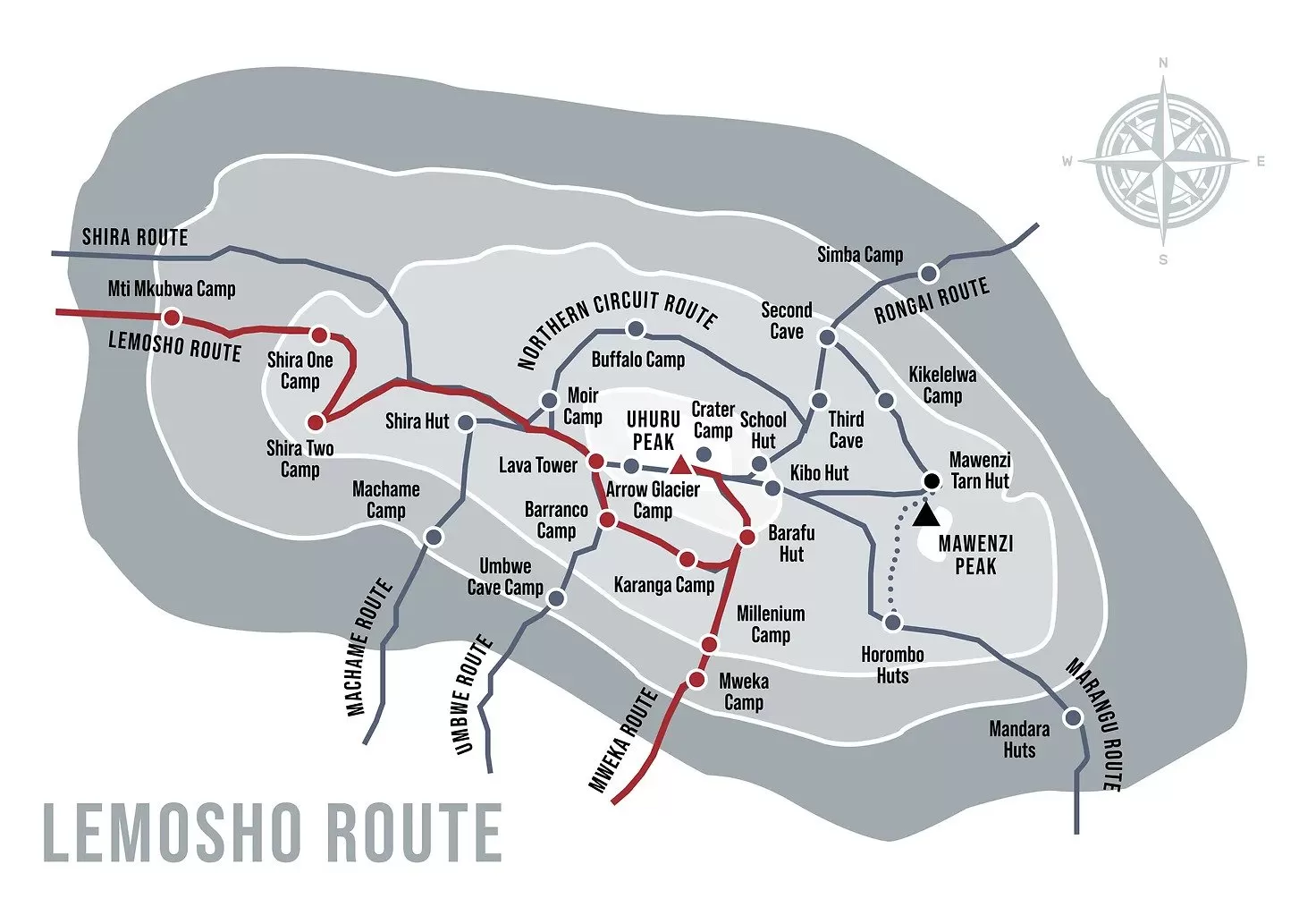
The Lemosho Route is celebrated as one of Kilimanjaro’s most picturesque and rewarding trails, offering an unforgettable blend of beauty, challenge, and high summit success. Beginning on the remote western slopes, it takes trekkers through a variety of landscapes—from dense rainforest filled with wildlife to sweeping moorlands, dramatic ridges, and open plains. The trail’s positioning also rewards climbers with some of the best panoramic views of the mountain and surrounding wilderness, creating an experience that feels both wild and immersive.
What makes Lemosho especially appealing is its well-paced and extended itinerary. With more days on the mountain, trekkers have the best opportunity to adjust gradually to the altitude, which significantly boosts summit success rates. While the route eventually converges with the popular Machame path, its first days are marked by tranquility and pristine nature, giving climbers the sense of a true wilderness adventure. For those who prioritize scenery, safety, and a higher chance of reaching Uhuru Peak, the Lemosho Route remains one of the finest choices on Mount Kilimanjaro.
The best times to climb Kilimanjaro coincide with the two dry seasons. Weather on the mountain is unpredictable, but choosing these periods maximizes your chances of clear skies and dry trails.
The rainy seasons of April, May, and November are best avoided. Trails can be muddy and slippery, and heavy cloud cover can obscure the magnificent views. However, for those seeking ultimate solitude, these months offer the quietest experience on the mountain.

• Begin your adventure on the remote western side of Mount Kilimanjaro, where the Lemosho Route offers a quiet and scenic start away from the busier trails.
• Trek across the spectacular Shira Plateau and enjoy wide open views of the mountain, dramatic landscapes, and unique alpine scenery along the way.
• Benefit from one of the longest and best acclimatization routes on Kilimanjaro, giving your body more time to adjust to the altitude and improving your chances of reaching the summit.
• Walk through a variety of ecosystems, from lush rainforest to moorlands and alpine desert, experiencing the mountain’s incredible diversity.
• Reach the summit at sunrise after an unforgettable overnight climb, standing on Uhuru Peak and celebrating on the highest point in Africa.